This page shows railroadiana items of unusual interest. These images
were sent in by collectors for others to enjoy; the items are not
for sale. As images are replaced on the "front page" of
the website, they will be archived here. See links to other pages
of Featured Items at the bottom of the page. A special thanks
to those who have sent in images.
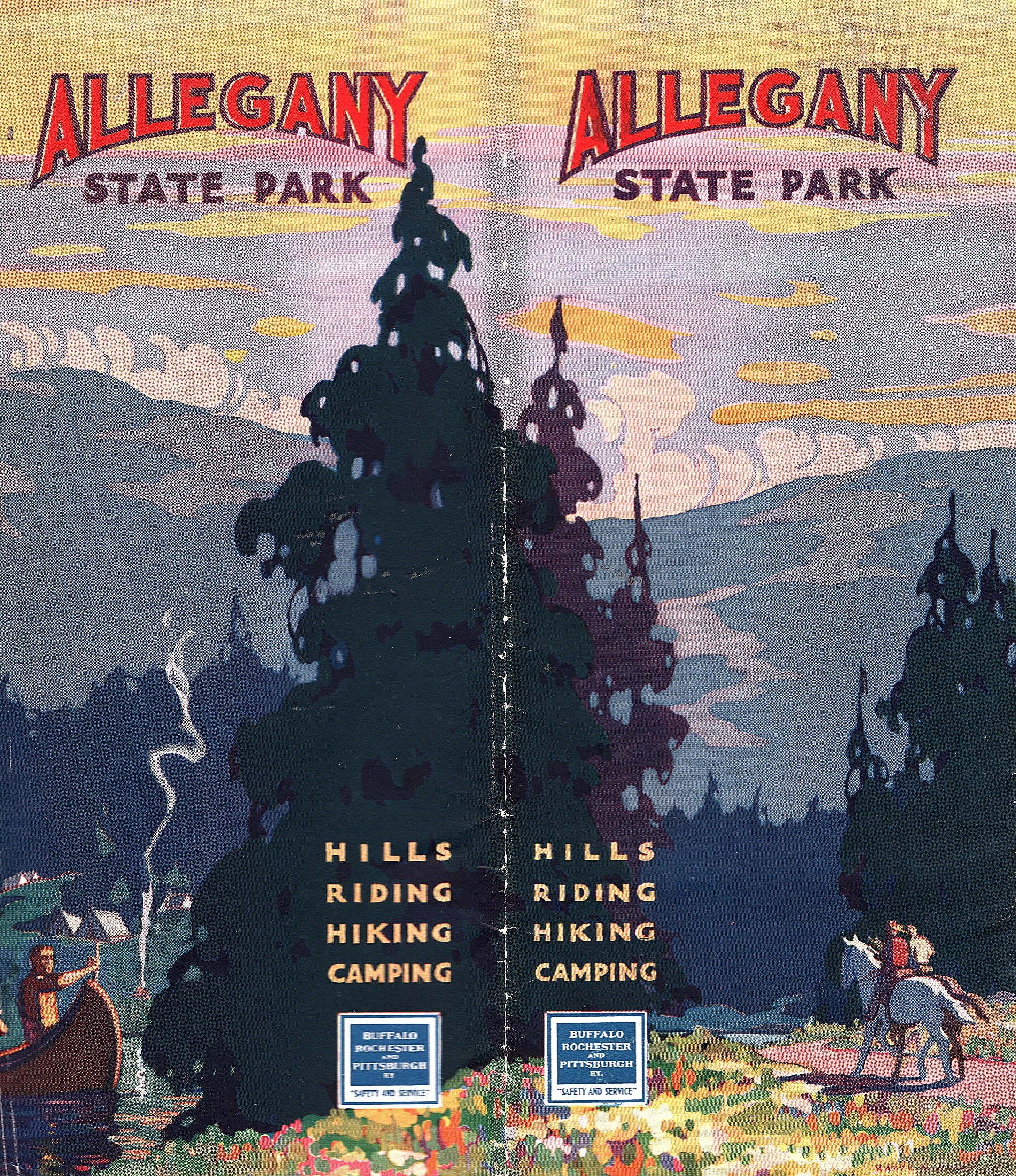
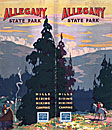 Travel Brochure. In today's era of exotic travel destinations, it's hard to imagine a private transportation system devoting the effort and expense to promote a state park. Yet that's exactly what this1928 brochure from the Buffalo, Rochester & Pittsburgh Railway represents. The brochure beckons people to visit the Allegany State Park in the state of New York for activities like camping, fishing, and relaxation. Presumably the railroad hoped park visitors would travel there by train, since BR&P rails ran close to the park in the vicinity of Salamanca, NY. Allegany State Park still exists as do the ex-BR&P rails, but you can't take a passenger train there anymore. Click on the image for a larger version. Travel Brochure. In today's era of exotic travel destinations, it's hard to imagine a private transportation system devoting the effort and expense to promote a state park. Yet that's exactly what this1928 brochure from the Buffalo, Rochester & Pittsburgh Railway represents. The brochure beckons people to visit the Allegany State Park in the state of New York for activities like camping, fishing, and relaxation. Presumably the railroad hoped park visitors would travel there by train, since BR&P rails ran close to the park in the vicinity of Salamanca, NY. Allegany State Park still exists as do the ex-BR&P rails, but you can't take a passenger train there anymore. Click on the image for a larger version. |
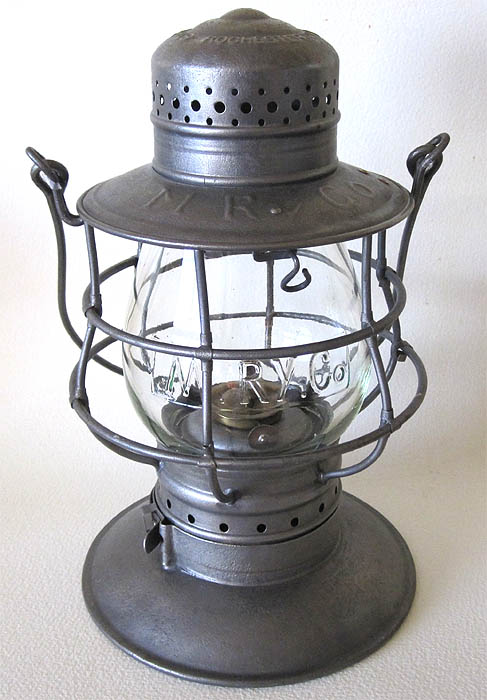
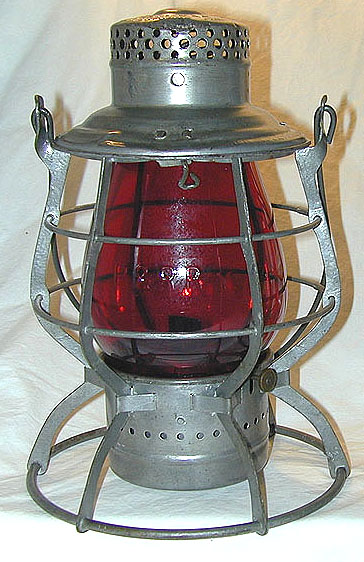
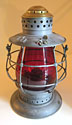 Monongahela Railway Lantern made by William Porter's Sons. This brass top railroad lantern was manufactured by the William Porter's Sons Company for the Monongahela Railway. It takes a special 6-inch globe that is narrower than a standard globe of that height; a regular 6-inch globe is too wide! The red globe has"M Ry Co" cast lettering, and the frame has one-inch tall "M. Ry Co." lettering stamped on the rim. The latest patent date is December 12, 1882. However, the actual date of manufacture was likely much later than that since the "Monongahela Railway Company" name dates to 1915. Photo by permission. Click on the image above for a larger version. Monongahela Railway Lantern made by William Porter's Sons. This brass top railroad lantern was manufactured by the William Porter's Sons Company for the Monongahela Railway. It takes a special 6-inch globe that is narrower than a standard globe of that height; a regular 6-inch globe is too wide! The red globe has"M Ry Co" cast lettering, and the frame has one-inch tall "M. Ry Co." lettering stamped on the rim. The latest patent date is December 12, 1882. However, the actual date of manufacture was likely much later than that since the "Monongahela Railway Company" name dates to 1915. Photo by permission. Click on the image above for a larger version. |
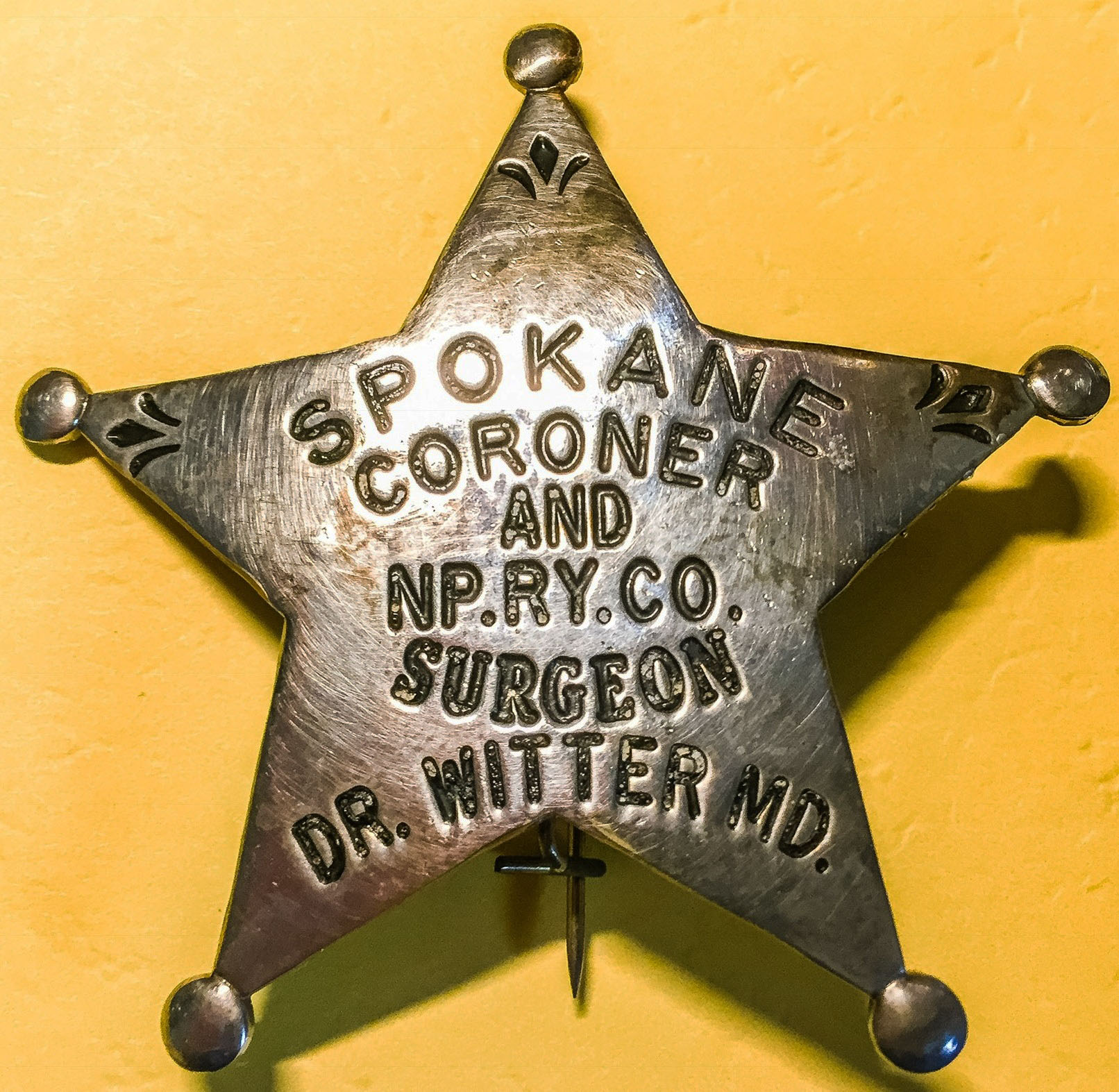
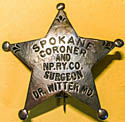 Spokane Coroner & Northern Pacific Surgeon Badge. Railroad badges tend to have generic wording designating a role rather than a specific person, but this stunning badge is an exception. It is a 5-pointed star badge formerly worn by a physician who was both a coroner for the city of Spokane, Washington and a company surgeon for the Northern Pacific Railway. The NP had extensive facilities in Spokane. There must be a story behind this dual role, but at this point it is unknown. Photo by permission. Click on the image for a larger version. Spokane Coroner & Northern Pacific Surgeon Badge. Railroad badges tend to have generic wording designating a role rather than a specific person, but this stunning badge is an exception. It is a 5-pointed star badge formerly worn by a physician who was both a coroner for the city of Spokane, Washington and a company surgeon for the Northern Pacific Railway. The NP had extensive facilities in Spokane. There must be a story behind this dual role, but at this point it is unknown. Photo by permission. Click on the image for a larger version. |
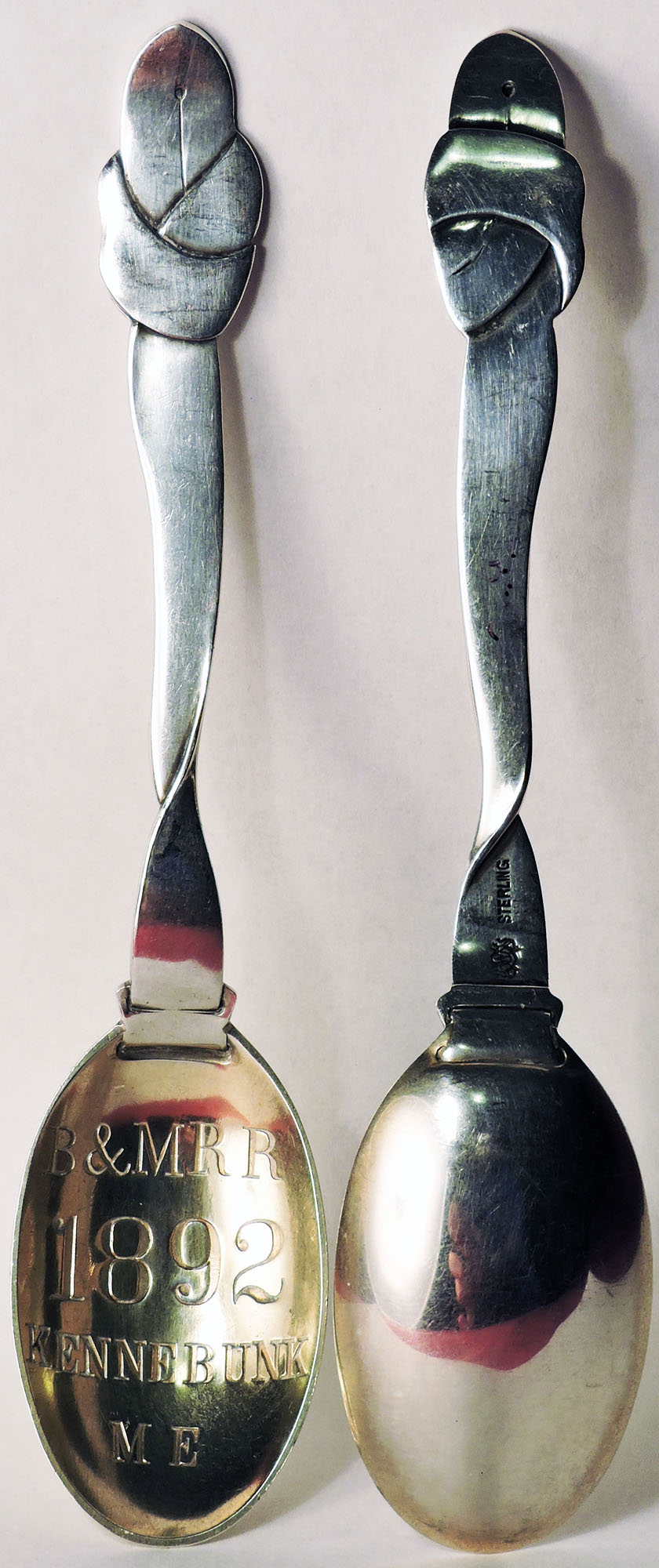
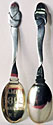 Souvenir Spoon from the Boston & Maine Railroad. Sterling silver baggage tag souvenir spoons were made in the early 1890s for travelers to buy as a memento of their rail trip. The spoons were made by Wendell Mfg. Co. The handle is shaped like a leather strap and the bowl is the "tag" and stamped in the style of a real brass baggage tag. Usually the bowl is gilded so it looks like it is brass. They measure just a tad over 5-1/2" long. [Thanks to Chris fromTennessee]. Click on the image for a larger version. Souvenir Spoon from the Boston & Maine Railroad. Sterling silver baggage tag souvenir spoons were made in the early 1890s for travelers to buy as a memento of their rail trip. The spoons were made by Wendell Mfg. Co. The handle is shaped like a leather strap and the bowl is the "tag" and stamped in the style of a real brass baggage tag. Usually the bowl is gilded so it looks like it is brass. They measure just a tad over 5-1/2" long. [Thanks to Chris fromTennessee]. Click on the image for a larger version. |
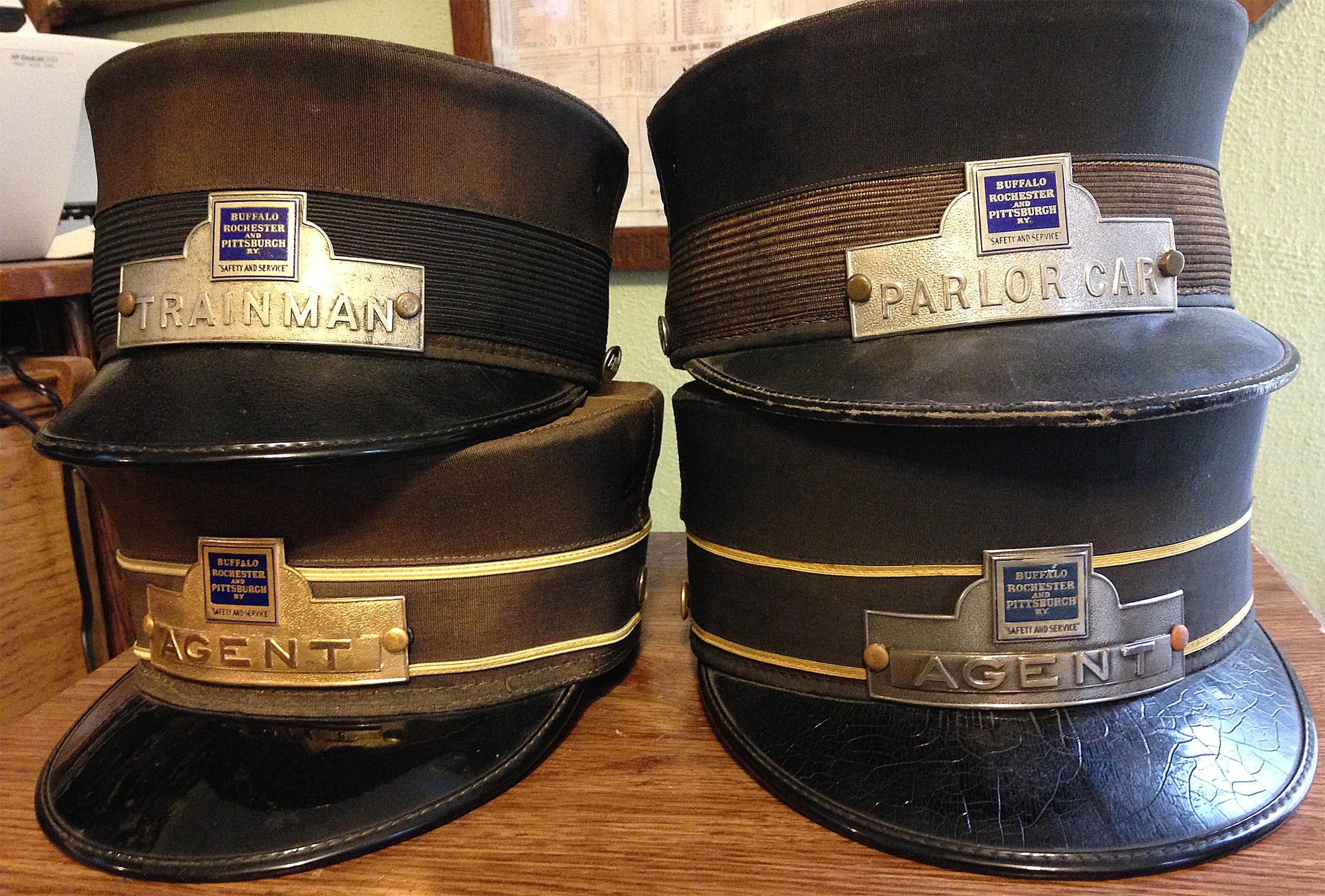
 Hat Badges from the Buffalo, Rochester & Pittsburgh Railway. The BR&P logo badges were first adopted over the strip badge in 1916, and were in use until the B&O takeover in January of 1932. The reason for the silver and gold agents' badges -- as told by a BR&P historian -- was that the agents were first issued silver badges but complained when conductors were issued gold badges, thus making the next issue of agents' badges gold! [Thanks to Stan Carlson, Salamanca Rail Museum]. Click on the image for a larger version. Hat Badges from the Buffalo, Rochester & Pittsburgh Railway. The BR&P logo badges were first adopted over the strip badge in 1916, and were in use until the B&O takeover in January of 1932. The reason for the silver and gold agents' badges -- as told by a BR&P historian -- was that the agents were first issued silver badges but complained when conductors were issued gold badges, thus making the next issue of agents' badges gold! [Thanks to Stan Carlson, Salamanca Rail Museum]. Click on the image for a larger version. |
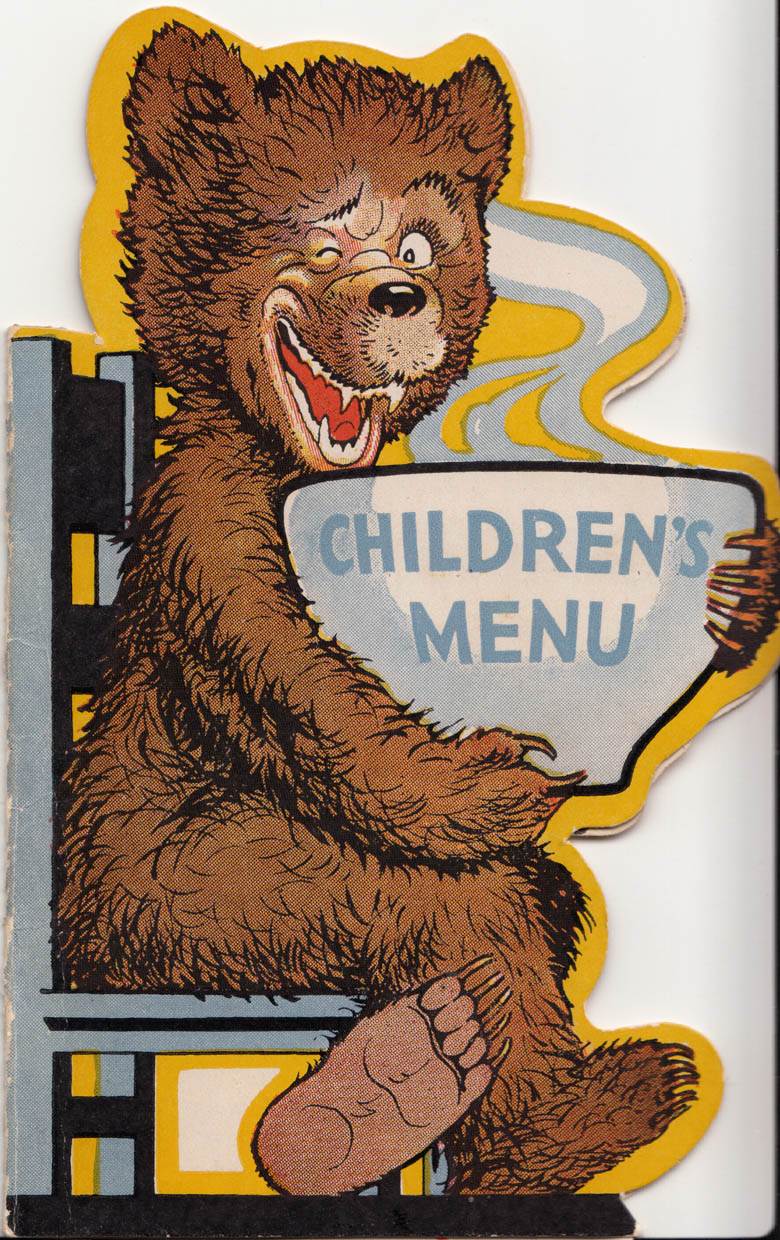
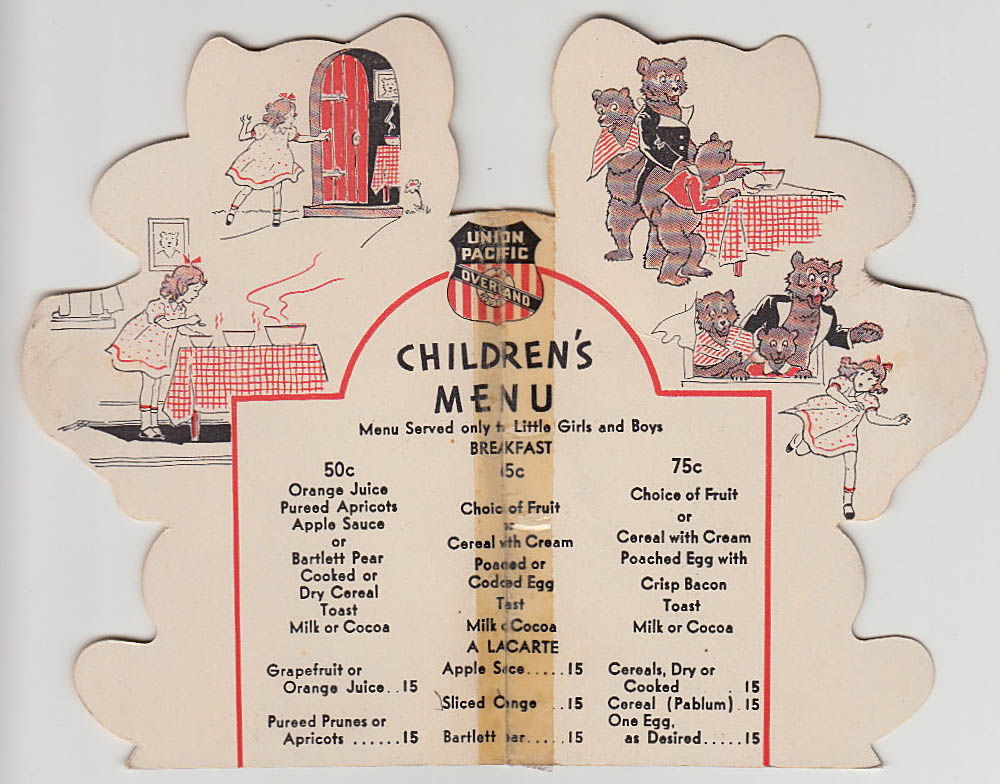
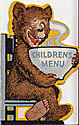 Children's Menu. A rather scary bear from the Goldilocks fable adorns the cover of this Union Pacific Children's menu. The menu is undated but probably goes back to the 1930s-1940s. This was an era when railroads maintained high standards of railroad dining car service and were willing to commission special artwork for younger travellers. Click the image for a larger version; click here to see the interior of the menu where a bowl of cereal or an egg costs 15 cents! Click on the image for a larger version. Children's Menu. A rather scary bear from the Goldilocks fable adorns the cover of this Union Pacific Children's menu. The menu is undated but probably goes back to the 1930s-1940s. This was an era when railroads maintained high standards of railroad dining car service and were willing to commission special artwork for younger travellers. Click the image for a larger version; click here to see the interior of the menu where a bowl of cereal or an egg costs 15 cents! Click on the image for a larger version. |
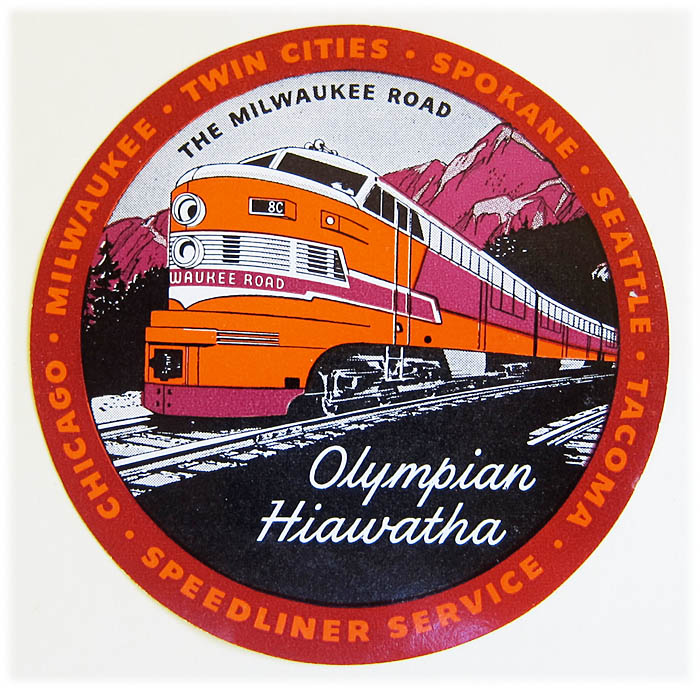
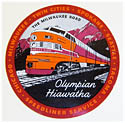 Baggage Stickers. Baggage stickers were issued by railroads to be attached to passengers' luggage, basically as a promotional item. The passenger got a memento of the trip, and the railroad got a bit of free advertising. Many railroad baggage stickers were quite colorful, but few rivaled the brilliant colors of the Milwaukee Road' s Olympian Hiawatha stickers. This example features one of their Fairbanks Morse "Erie Built" diesel locomotives, resplendent with stainless steel nose panels. The sticker likely dates to the late1940's or early 1950's. Click on the image for a larger version. Baggage Stickers. Baggage stickers were issued by railroads to be attached to passengers' luggage, basically as a promotional item. The passenger got a memento of the trip, and the railroad got a bit of free advertising. Many railroad baggage stickers were quite colorful, but few rivaled the brilliant colors of the Milwaukee Road' s Olympian Hiawatha stickers. This example features one of their Fairbanks Morse "Erie Built" diesel locomotives, resplendent with stainless steel nose panels. The sticker likely dates to the late1940's or early 1950's. Click on the image for a larger version. |
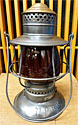 Rare Lantern. Brass-top, bellbottom lanterns are considered one of the most collectible categories of railroad lanterns. Examples from some railroads are seen fairly often, for example, those from the Milwaukee Road (CM&StP Ry). Others are on the opposite end of the spectrum and are exceedingly rare. An example of the latter is shown here. It is from the Northern Pacific Railroad before it became a "Railway" in 1893. The globe is a particularly rare version of an "NP RR" red cast globe. The photo was taken at the November, 2012 swap meet of the Boeing Model Railroad Club, held in Kent, Washington. Click on the image for a larger version. Rare Lantern. Brass-top, bellbottom lanterns are considered one of the most collectible categories of railroad lanterns. Examples from some railroads are seen fairly often, for example, those from the Milwaukee Road (CM&StP Ry). Others are on the opposite end of the spectrum and are exceedingly rare. An example of the latter is shown here. It is from the Northern Pacific Railroad before it became a "Railway" in 1893. The globe is a particularly rare version of an "NP RR" red cast globe. The photo was taken at the November, 2012 swap meet of the Boeing Model Railroad Club, held in Kent, Washington. Click on the image for a larger version. |
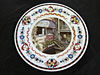 Service Plate. In the great age of railroad passenger service, dining cars often featured service plates on dining car tables. A service plate is basically a piece of china that indicates a place at the table; it is usually not actually used for eating. Some railroad service plates were beautiful works of art, and surviving pieces are a major focus of railroad china collectors. Few service plates were as beautiful as the Illinois Central Railroad's "French Quarter" series of service plates. An example is shown here; photo taken by Rob Hoffer at the Gaithersburg show held in November, 2011. Click on the image for a larger version. Service Plate. In the great age of railroad passenger service, dining cars often featured service plates on dining car tables. A service plate is basically a piece of china that indicates a place at the table; it is usually not actually used for eating. Some railroad service plates were beautiful works of art, and surviving pieces are a major focus of railroad china collectors. Few service plates were as beautiful as the Illinois Central Railroad's "French Quarter" series of service plates. An example is shown here; photo taken by Rob Hoffer at the Gaithersburg show held in November, 2011. Click on the image for a larger version. |
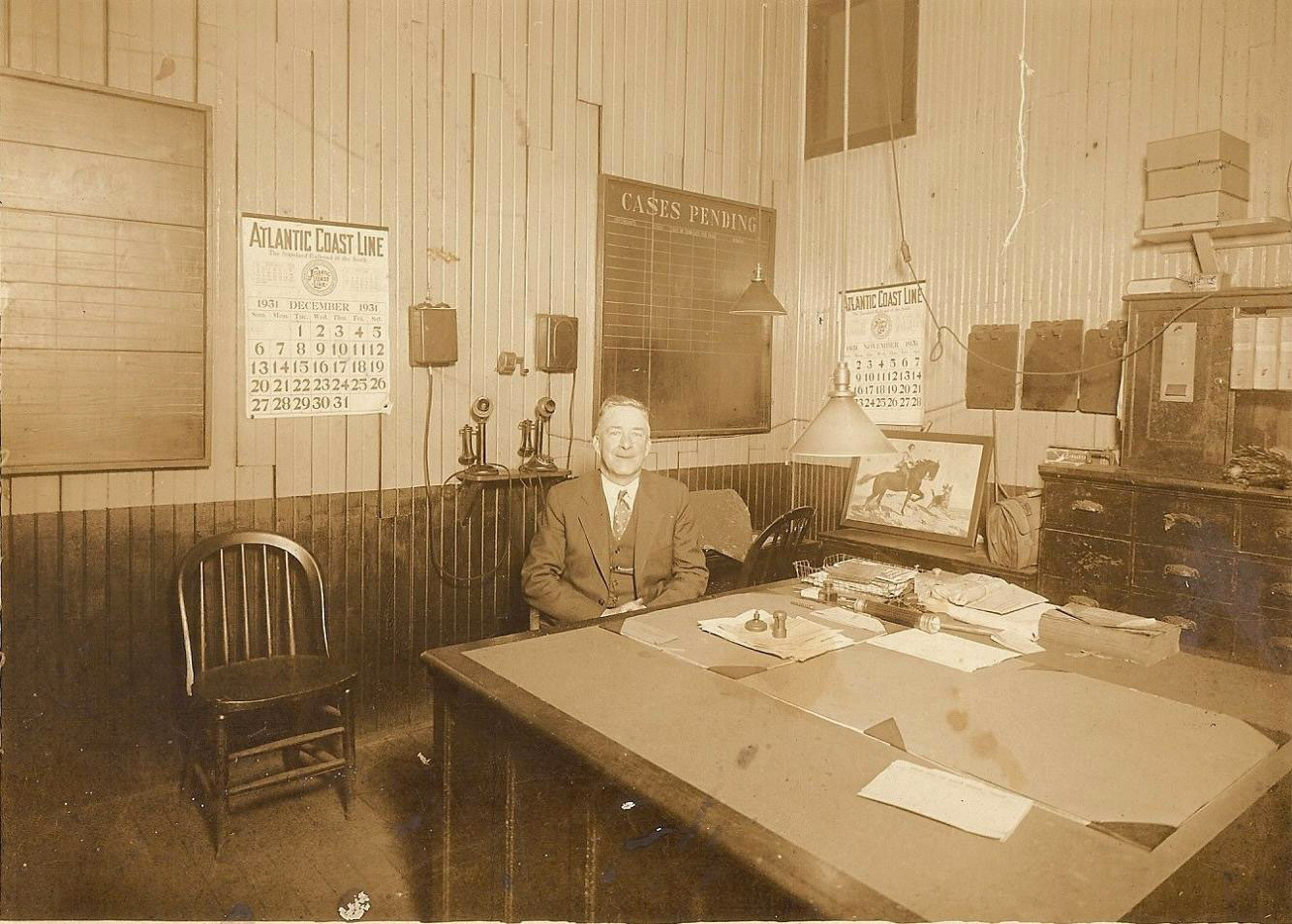
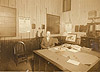 Railroad Lieutenant Photo. Old photos that come out of family archives are among the most interesting, one-of-a-kind types of railroadiana that can be found. Usually the focus of the photo is a family member, but the background can provide a fascinating glimpe into railroading's past. This 1930's photo of an Atlantic Coast Line Lieutenant is a case in point. Note the "Cases Pending" board, the horse rider picture and all the other items that adorn this gentleman's office. Thanks to MD for sending this photo of his great grandfather and for permission to show it here. Click on the image for a larger version. Railroad Lieutenant Photo. Old photos that come out of family archives are among the most interesting, one-of-a-kind types of railroadiana that can be found. Usually the focus of the photo is a family member, but the background can provide a fascinating glimpe into railroading's past. This 1930's photo of an Atlantic Coast Line Lieutenant is a case in point. Note the "Cases Pending" board, the horse rider picture and all the other items that adorn this gentleman's office. Thanks to MD for sending this photo of his great grandfather and for permission to show it here. Click on the image for a larger version. |
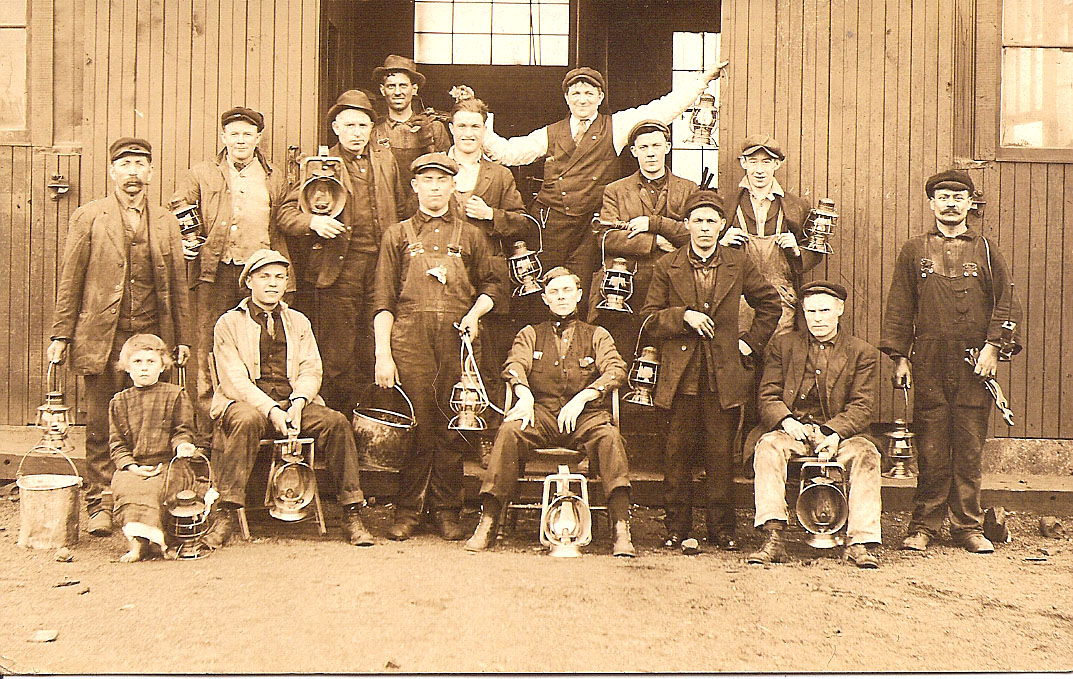
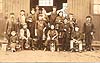 Crew Photo. In the glory days of railroading, it was common for individual railroaders and groups of railroaders to have their photos taken. For individuals, this was typically a posed studio portrait, complete with uniform. For groups of employees, this was usually an outdoor shot in front of a locomotive or railroad structure. Sometimes employees were shown with accompanying tools of the trade such as lanterns. Shown here is a wonderful photo from the tall-globe lantern era -- probably pre-World War 1. Note the great assortment of brakeman and inspector lanterns carried by almost everyone, including the little girl at lower left!. Photo by permission. Click on the image for a larger version. Crew Photo. In the glory days of railroading, it was common for individual railroaders and groups of railroaders to have their photos taken. For individuals, this was typically a posed studio portrait, complete with uniform. For groups of employees, this was usually an outdoor shot in front of a locomotive or railroad structure. Sometimes employees were shown with accompanying tools of the trade such as lanterns. Shown here is a wonderful photo from the tall-globe lantern era -- probably pre-World War 1. Note the great assortment of brakeman and inspector lanterns carried by almost everyone, including the little girl at lower left!. Photo by permission. Click on the image for a larger version. |
 Monongahela Lantern. Coal-hauling roads were noted for their frugality and generally did not spend money on fancy lanterns. So this tall-globe, bellbottom lantern made by the Star Headlight & Lantern Company for the Monongahela Railway may represent a rare moment of extravagance. The lantern has a clear cast globe and likely dates to the period between 1915 and the World War One era when short-globe lanterns were developed. The Monongahela Railway Company was formed in 1915 from a couple of predecessor lines, and business prospects at the time were particularly promising. Perhaps this explains the expenditure on some nicely marked lanterns. Photo by permission. Click on the image for a larger version. Monongahela Lantern. Coal-hauling roads were noted for their frugality and generally did not spend money on fancy lanterns. So this tall-globe, bellbottom lantern made by the Star Headlight & Lantern Company for the Monongahela Railway may represent a rare moment of extravagance. The lantern has a clear cast globe and likely dates to the period between 1915 and the World War One era when short-globe lanterns were developed. The Monongahela Railway Company was formed in 1915 from a couple of predecessor lines, and business prospects at the time were particularly promising. Perhaps this explains the expenditure on some nicely marked lanterns. Photo by permission. Click on the image for a larger version. |
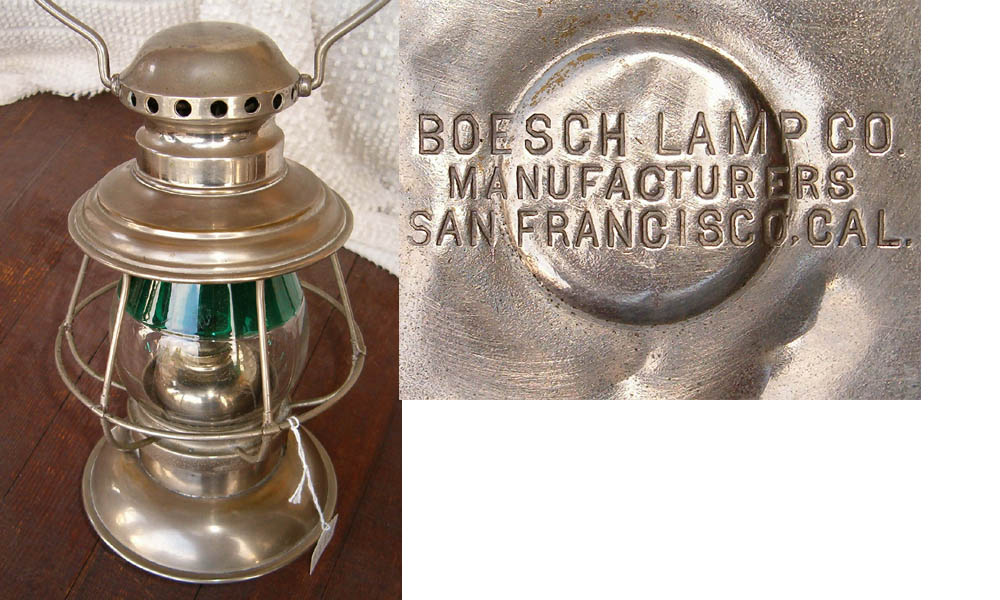
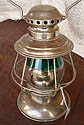 Boesch Conductor's Lantern. Conductor's lanterns were made by a range of manufacturers, from the major "name brand" lantern makers to smaller obscure companies that seemed to specialize only in this lantern style. Pictured here is a conductor's lantern from a rare maker: Boesch Lamp Company of San Francisco. It has a green-over-clear globe. Photo by Tom Stranko. Click on the image for a larger version. Boesch Conductor's Lantern. Conductor's lanterns were made by a range of manufacturers, from the major "name brand" lantern makers to smaller obscure companies that seemed to specialize only in this lantern style. Pictured here is a conductor's lantern from a rare maker: Boesch Lamp Company of San Francisco. It has a green-over-clear globe. Photo by Tom Stranko. Click on the image for a larger version. |
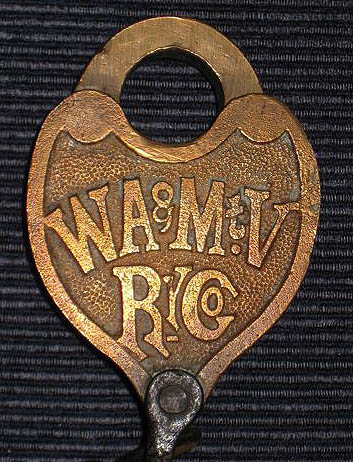
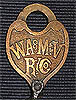 Interurban "Castback" Lock. Brass "castback" locks from interurban lines are quite unusual. The example shown at right is from the Washington, Alexandria & Mt. Vernon Railway, an interurban line that ran from Washington DC through Alexandria, Va. down to Mount Vernon, George Washington¹s home. The line ran from the 1890's to the early 1930's. During the Depression it was combined with other lines. Photo by permission. Click on the image for a larger version. Interurban "Castback" Lock. Brass "castback" locks from interurban lines are quite unusual. The example shown at right is from the Washington, Alexandria & Mt. Vernon Railway, an interurban line that ran from Washington DC through Alexandria, Va. down to Mount Vernon, George Washington¹s home. The line ran from the 1890's to the early 1930's. During the Depression it was combined with other lines. Photo by permission. Click on the image for a larger version. |
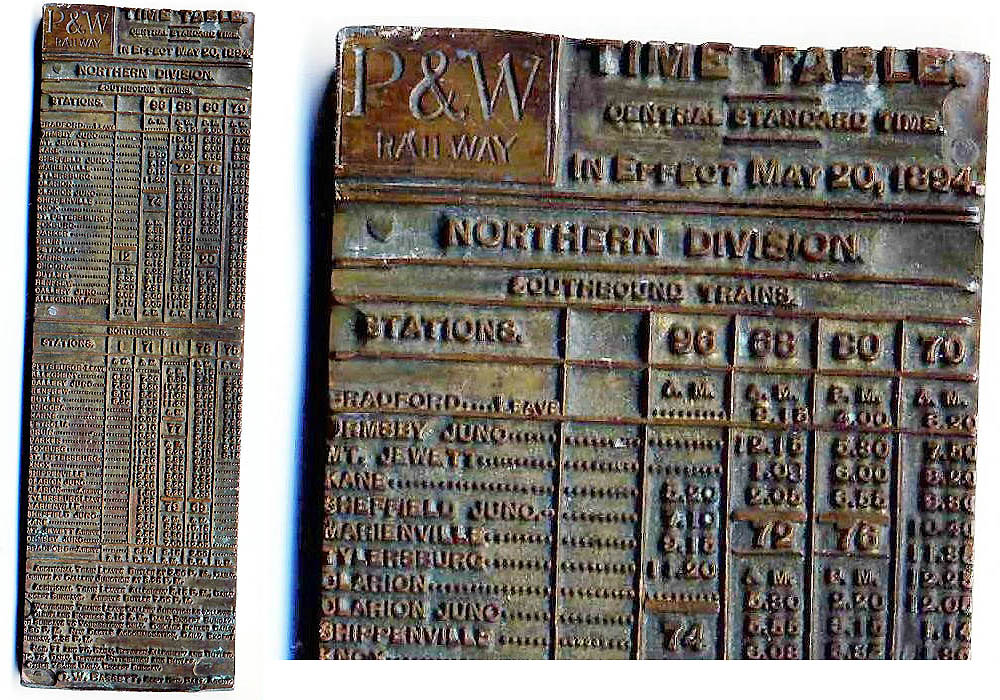
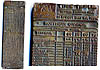 Printer's Block. Back in the days before computers and typesetting machines, railroad timetables were printed with printer's blocks. Shown here is such a block from the Pittsburgh & Western Railroad used to print an 1894 public timetable. The block is about 7" x 3" in size and appears to be brass/copper on lead. Photo by Gary Moser. Click on the image for a larger version. Printer's Block. Back in the days before computers and typesetting machines, railroad timetables were printed with printer's blocks. Shown here is such a block from the Pittsburgh & Western Railroad used to print an 1894 public timetable. The block is about 7" x 3" in size and appears to be brass/copper on lead. Photo by Gary Moser. Click on the image for a larger version. |
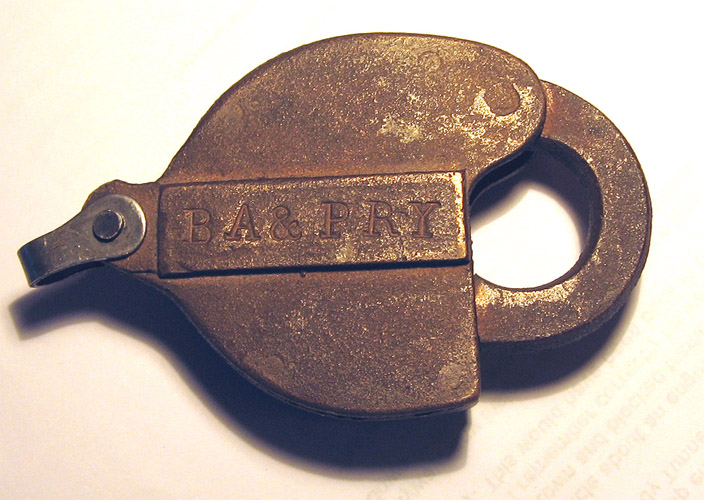
 BA&P Ry Lock. This lock from the Butte, Anaconda & Pacific Railway is a bit unusual in that the railway's initials are stamped on the body of the lock rather than on the hasp. The letters are uneven and therefore were probably stamped by the company's shop forces. The lock's authenticity is supported by (1) an overall patina that includes the letters, and (2) the fact that an authentic BA&P key, obtained independently, opens it. The lock was found at the November, 2008 railroad show sponsored by the Boeing Model Railroad Club. Click on the image for a larger version. BA&P Ry Lock. This lock from the Butte, Anaconda & Pacific Railway is a bit unusual in that the railway's initials are stamped on the body of the lock rather than on the hasp. The letters are uneven and therefore were probably stamped by the company's shop forces. The lock's authenticity is supported by (1) an overall patina that includes the letters, and (2) the fact that an authentic BA&P key, obtained independently, opens it. The lock was found at the November, 2008 railroad show sponsored by the Boeing Model Railroad Club. Click on the image for a larger version. |
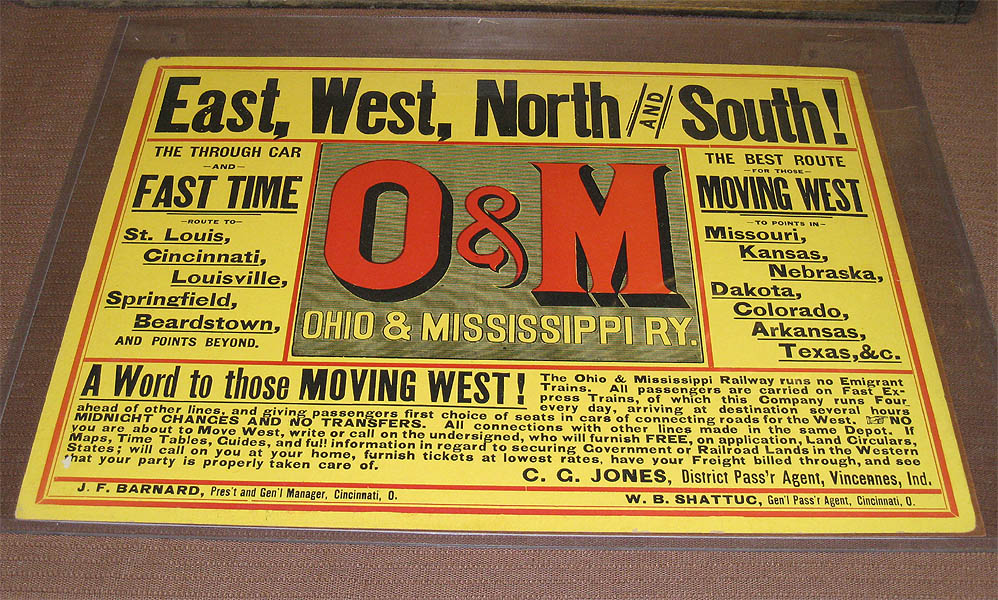
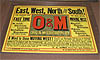 Broadsides. Railroads used posters of various sizes to advertise schedules and promote travel. Such posters were typically made of paper and printed in some quantity, but most were thrown away after use. In today's collectors' market, such posters are referred to as "broadsides". Shown at right is a rare, colorful broadside from the Ohio & Mississippi Railway. The photo was taken by Rob Hoffer at the 2008 Columbus, Ohio railroadiana show. Click on the image for a larger version. Broadsides. Railroads used posters of various sizes to advertise schedules and promote travel. Such posters were typically made of paper and printed in some quantity, but most were thrown away after use. In today's collectors' market, such posters are referred to as "broadsides". Shown at right is a rare, colorful broadside from the Ohio & Mississippi Railway. The photo was taken by Rob Hoffer at the 2008 Columbus, Ohio railroadiana show. Click on the image for a larger version. |
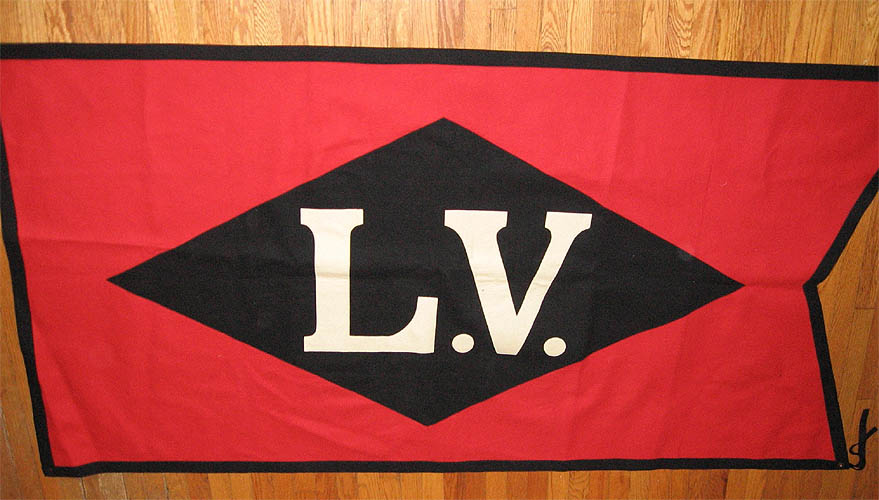
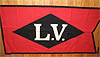 Corporate Flag. Railroad logos were (and continue to be) an important symbol of both corporate identity and public relations. Shown at right is a cloth flag featuring the logo of the Lehigh Valley Railroad. It was hung as a tapestry in the railroad's corporate offices in Bethlehem, PA. The Lehigh Valley was absorbed into Conrail in 1976. Photo by Greg Deibler. Click on the image for a larger version. Corporate Flag. Railroad logos were (and continue to be) an important symbol of both corporate identity and public relations. Shown at right is a cloth flag featuring the logo of the Lehigh Valley Railroad. It was hung as a tapestry in the railroad's corporate offices in Bethlehem, PA. The Lehigh Valley was absorbed into Conrail in 1976. Photo by Greg Deibler. Click on the image for a larger version. |
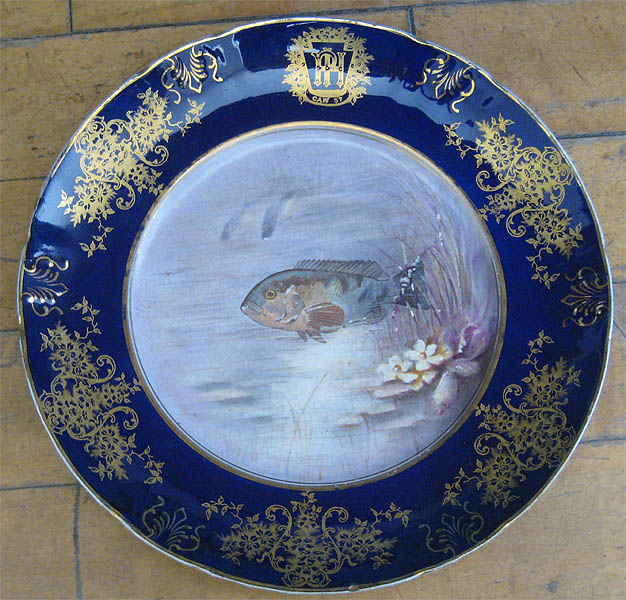
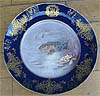 Mystery Plate. This beautiful plate surfaced at the 2007 Railroad, Steamship,and Transportation Artifacts Show held in Gaithersburg, MD. Its origin is somewhat of a mystery, but research by a veteran china collector suggests one possibility: The plate has a "PH" in a keystone, which is similar to a uniform button from the "Panhandle Route" -- nickname for the Pittsburgh, Cincinnati, Chicago, & St. Louis Railway. An 1890 Official Railway Equipment Register shows that the PCC&StL had a business car number 37, which corresponds to the "Car 37" shown on the plate. So this is plausibly a piece of railroad business car china. Photo by Rob Hoffer. Click on the image for a larger version. Mystery Plate. This beautiful plate surfaced at the 2007 Railroad, Steamship,and Transportation Artifacts Show held in Gaithersburg, MD. Its origin is somewhat of a mystery, but research by a veteran china collector suggests one possibility: The plate has a "PH" in a keystone, which is similar to a uniform button from the "Panhandle Route" -- nickname for the Pittsburgh, Cincinnati, Chicago, & St. Louis Railway. An 1890 Official Railway Equipment Register shows that the PCC&StL had a business car number 37, which corresponds to the "Car 37" shown on the plate. So this is plausibly a piece of railroad business car china. Photo by Rob Hoffer. Click on the image for a larger version. |
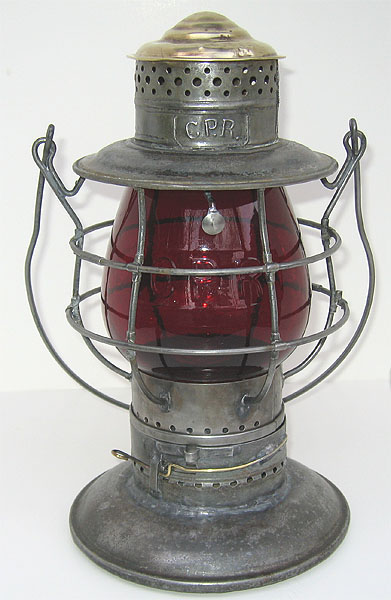
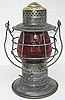 CPR "Boxall" Lantern. A recent question on our question board concerned an unusual Canadian Pacific lantern -- see Question 1156 and page on unusual CPR Lantern . In response, several images were sent in of lanterns thought to be made by Boxall, a Canadian manufacturer. The lantern shown at right is one example. However, little is known of this company, and one reference even describes as many a three companies that may have used some variation of that name. Photo by permission. Click on the image for a larger version. CPR "Boxall" Lantern. A recent question on our question board concerned an unusual Canadian Pacific lantern -- see Question 1156 and page on unusual CPR Lantern . In response, several images were sent in of lanterns thought to be made by Boxall, a Canadian manufacturer. The lantern shown at right is one example. However, little is known of this company, and one reference even describes as many a three companies that may have used some variation of that name. Photo by permission. Click on the image for a larger version. |
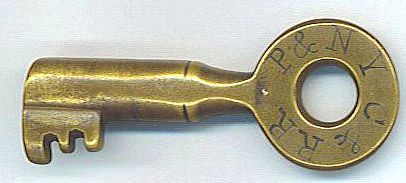
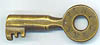 Early P&NYC&R Key. Railroad keys with a tapered barrel are generally older than non-tapered keys, and this key certainly fits in the "old" category. It was used by the Pennsylvania and New York Canal and Railroad Company, which was a predecessor to the Lehigh Valley Railroad. The company's towpath became the right-of-way for the LV mainline heading east from Athens, PA. Note the lettering style and worn patina, both characteristics of authentic, historical keys. Photo by permission. Click on the image for a larger version. Early P&NYC&R Key. Railroad keys with a tapered barrel are generally older than non-tapered keys, and this key certainly fits in the "old" category. It was used by the Pennsylvania and New York Canal and Railroad Company, which was a predecessor to the Lehigh Valley Railroad. The company's towpath became the right-of-way for the LV mainline heading east from Athens, PA. Note the lettering style and worn patina, both characteristics of authentic, historical keys. Photo by permission. Click on the image for a larger version. |
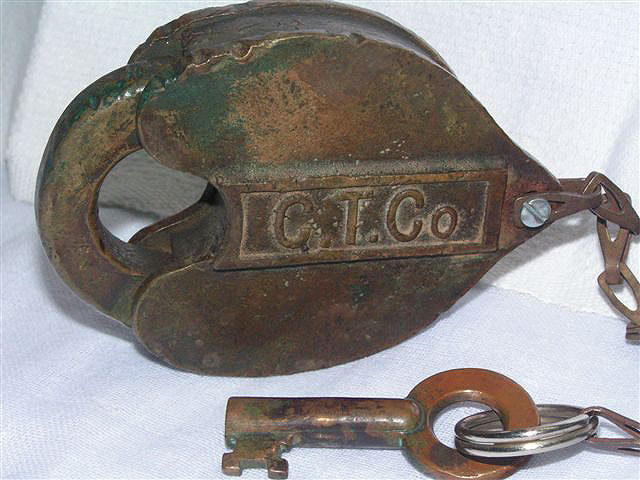
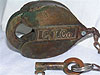 C.T. Co. Lock and key . Most railroad locks are found with markings containing the letters "RR" or "Ry", but there are exceptions. Shown at right is a cast brass lock and key from the C.T. Co -- initials which in this case indicate the Conestoga Traction Company. The C.T. Co. ran the trolley cars in the Lancaster, Pennsylvania area. Photo by Jim Rothermel. Click on the image for a larger
version. C.T. Co. Lock and key . Most railroad locks are found with markings containing the letters "RR" or "Ry", but there are exceptions. Shown at right is a cast brass lock and key from the C.T. Co -- initials which in this case indicate the Conestoga Traction Company. The C.T. Co. ran the trolley cars in the Lancaster, Pennsylvania area. Photo by Jim Rothermel. Click on the image for a larger
version. |
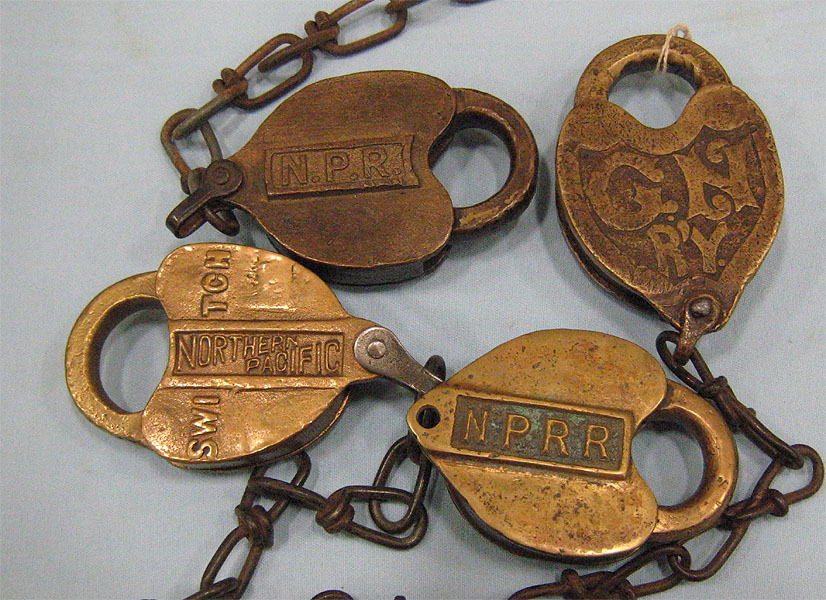
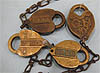 "Hill Line" Locks . The Northern Pacific and Great Northern Railways were both merged into the Burlington Northern Railroad in 1970, a company that eventually became today's BNSF Railway. However, even before that, both lines were once controlled by James J. Hill, the "Empire Builder" and last of the great railroad magnates. The Northern Pacific and Great Northern Railways -- along with a couple other railroads -- were referred to as the "Hill Lines", so these beautiful cast brass locks from the NP and GN more or less belong together. The locks were photographed by Rob Hoffer at the April, 2007 Chicagoland Railroadiana show. Click on the image for a larger
version. "Hill Line" Locks . The Northern Pacific and Great Northern Railways were both merged into the Burlington Northern Railroad in 1970, a company that eventually became today's BNSF Railway. However, even before that, both lines were once controlled by James J. Hill, the "Empire Builder" and last of the great railroad magnates. The Northern Pacific and Great Northern Railways -- along with a couple other railroads -- were referred to as the "Hill Lines", so these beautiful cast brass locks from the NP and GN more or less belong together. The locks were photographed by Rob Hoffer at the April, 2007 Chicagoland Railroadiana show. Click on the image for a larger
version. |
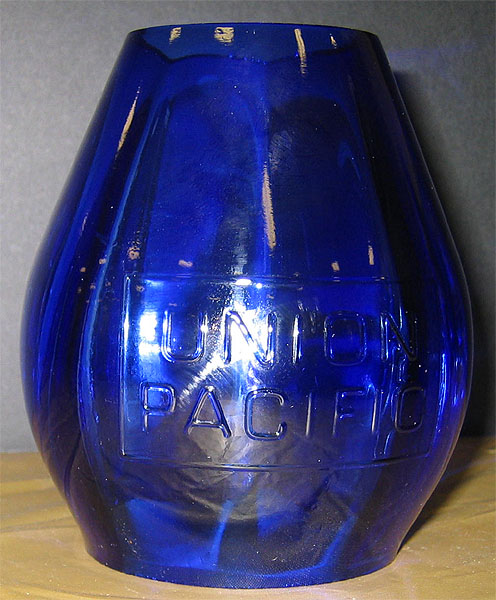
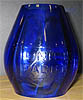 Union Pacific Blue Cast Globe . Different lantern globe colors signify different functions. A lantern with a true blue (sometimes called "cobalt blue" by collectors) globe signifies "Rule 26". According to this rule, a "blue signal, displayed at one or both ends of an engine, car, or train, indicates that workmen are under or about it; when thus protected it must not be coupled to or moved." Shown at right is a rare blue cast globe made for a tall-globe lantern and marked for the Union Pacific Railroad. Photo by Rob Hoffer taken at the January, 2007 railroadiana show in Buena Park, California. Click on the image for a larger
version. Union Pacific Blue Cast Globe . Different lantern globe colors signify different functions. A lantern with a true blue (sometimes called "cobalt blue" by collectors) globe signifies "Rule 26". According to this rule, a "blue signal, displayed at one or both ends of an engine, car, or train, indicates that workmen are under or about it; when thus protected it must not be coupled to or moved." Shown at right is a rare blue cast globe made for a tall-globe lantern and marked for the Union Pacific Railroad. Photo by Rob Hoffer taken at the January, 2007 railroadiana show in Buena Park, California. Click on the image for a larger
version. |
 Spokane Station Clock . Accurate timekeeping has always been a critical part of railroad operations, and the station clock was (and still is) the public symbol of this fact. Today, old station clocks are high collectible, but many fakes have been produced (see page on this) so collectors have to be especially careful. The authenticity of the clock shown at right is not in question, however. It was salvaged from the Spokane, Washington Union Station when it was razed in the early 70's and is currently on display in a museum. Spokane was perhaps *the* railroad hub of the entire Pacific Northwest so the number of travelers who glanced at this clock during their journeys can only be imagined. Photo by permission. Click on the image for a larger version. Update: We received the following from one of our visitors: "Regarding this clock, See: http://telechrontime.net. It looks like it has been installed into a very elegant cast metal frame which allows hanging it from the ceiling; the frame is not a GE/Telechron item but presumably was purpose built for this standard commercial wall clock. General Electric owned a major interest in Telechron from the 1930s on." -HS Spokane Station Clock . Accurate timekeeping has always been a critical part of railroad operations, and the station clock was (and still is) the public symbol of this fact. Today, old station clocks are high collectible, but many fakes have been produced (see page on this) so collectors have to be especially careful. The authenticity of the clock shown at right is not in question, however. It was salvaged from the Spokane, Washington Union Station when it was razed in the early 70's and is currently on display in a museum. Spokane was perhaps *the* railroad hub of the entire Pacific Northwest so the number of travelers who glanced at this clock during their journeys can only be imagined. Photo by permission. Click on the image for a larger version. Update: We received the following from one of our visitors: "Regarding this clock, See: http://telechrontime.net. It looks like it has been installed into a very elegant cast metal frame which allows hanging it from the ceiling; the frame is not a GE/Telechron item but presumably was purpose built for this standard commercial wall clock. General Electric owned a major interest in Telechron from the 1930s on." -HS |
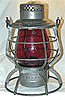 Unusual "Reliable" Lantern. The "Reliable" was the last tall-globe lantern model produced by Adams & Westlake, and it was used by a large number of railroads. There were numerous variations in this model. One of the most unusual variations is shown at right, marked for the Philadelphia & Reading Railway. It features a larger frame and takes a 6-inch globe. More photos of this lantern are shown at the bottom of our Reliable page. Photos by Jack Wall. Click on the image for a larger
version. Unusual "Reliable" Lantern. The "Reliable" was the last tall-globe lantern model produced by Adams & Westlake, and it was used by a large number of railroads. There were numerous variations in this model. One of the most unusual variations is shown at right, marked for the Philadelphia & Reading Railway. It features a larger frame and takes a 6-inch globe. More photos of this lantern are shown at the bottom of our Reliable page. Photos by Jack Wall. Click on the image for a larger
version. |
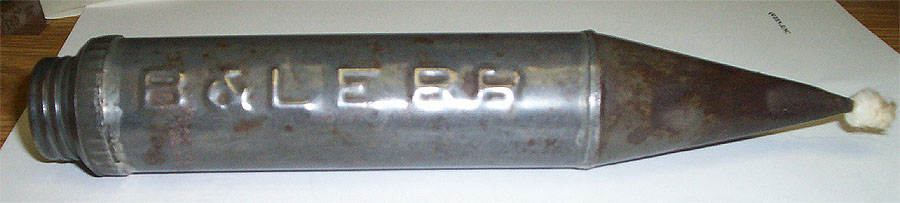
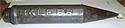 Bessemer
& Lake Erie Railroad Tinware. A huge
array of tinware was produced for railroad use, ranging
from rather ordinary items like buckets and scoops
to more specialized items that served particular railroad-related
functions. Shown at right is a fairly unusual graphite
gun used for applying graphite to switch locks.
It is marked with the initials of the Bessemer & Lake
Erie Railroad and is 9" in length and 1 1/16" in diameter.
Photo by Gary Moser. Click on the image for a larger
version. Bessemer
& Lake Erie Railroad Tinware. A huge
array of tinware was produced for railroad use, ranging
from rather ordinary items like buckets and scoops
to more specialized items that served particular railroad-related
functions. Shown at right is a fairly unusual graphite
gun used for applying graphite to switch locks.
It is marked with the initials of the Bessemer & Lake
Erie Railroad and is 9" in length and 1 1/16" in diameter.
Photo by Gary Moser. Click on the image for a larger
version. |
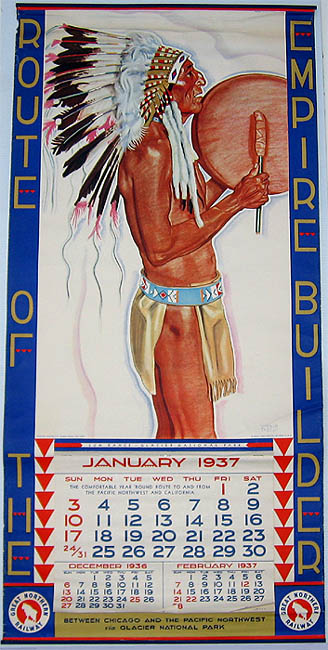
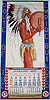 Great
Northern Calendars by Winold Reiss. Among the
more remarkable collaborations between an artist and a
railroad was the collaboration between Winold Reiss and
the Great Northern Railway. Between 1933 and 1958, the
GN issued annual calendars featuring Reiss' vivid and colorful
portraits of Native Americans from the Blackfeet tribe
in Montana. Reiss' portraits avoided the prejudices of
the era and portrayed tribal members with dignity and grace.
Shown at right is the 1937 calendar, titled "Sun Dance".
Photo by permission. Click on the image for a larger version. Great
Northern Calendars by Winold Reiss. Among the
more remarkable collaborations between an artist and a
railroad was the collaboration between Winold Reiss and
the Great Northern Railway. Between 1933 and 1958, the
GN issued annual calendars featuring Reiss' vivid and colorful
portraits of Native Americans from the Blackfeet tribe
in Montana. Reiss' portraits avoided the prejudices of
the era and portrayed tribal members with dignity and grace.
Shown at right is the 1937 calendar, titled "Sun Dance".
Photo by permission. Click on the image for a larger version. |
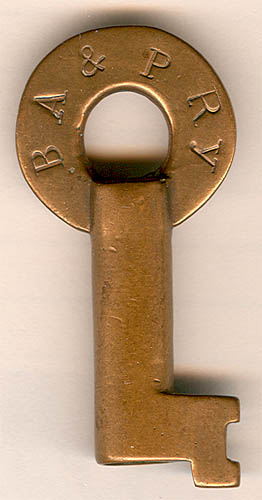
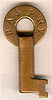 BA&P
Ry Switch Key . There are a number of qualities
that make a railroad switch key particularly collectable.
These qualities include (1) a nice, smooth patina -- what
collectors call "pocket-wear", (2) an even, strong
marking, preferably with fancy letters, and (3) a provenance
from an historical or out-of-the-ordinary railroad. The
key at right fits the bill. It is from the Butte, Anaconda
& Pacific Railway, an ore-hauling, electrified line that
operated between Butte and Anaconda, Montana. Note the large,
serif letters. Photo by permission. Click on the image for a
larger version. BA&P
Ry Switch Key . There are a number of qualities
that make a railroad switch key particularly collectable.
These qualities include (1) a nice, smooth patina -- what
collectors call "pocket-wear", (2) an even, strong
marking, preferably with fancy letters, and (3) a provenance
from an historical or out-of-the-ordinary railroad. The
key at right fits the bill. It is from the Butte, Anaconda
& Pacific Railway, an ore-hauling, electrified line that
operated between Butte and Anaconda, Montana. Note the large,
serif letters. Photo by permission. Click on the image for a
larger version. |
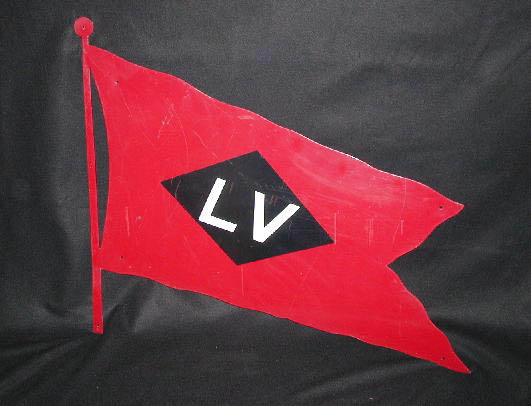
 Lehigh
Valley Locomotive Logo. One way that railroads
mark locomotives and rolling stock is to attach metal plates
painted with the company logo. Upon scrapping or repainting,
these have sometimes been removed and obtained by collectors.
Shown at right is an original 12 gauge, sheet metal Lehigh
Valley Railroad flag. These were formerly mounted on either
side of the short hood of the road's Alco C420's during
their original yellow and gray paint schemes. Most were
removed in the early 70's when the locomotives were repainted
in the newer red and white paint scheme, and very few have
survived. Photo by Greg Deibler. Click on the image for
a larger version. Lehigh
Valley Locomotive Logo. One way that railroads
mark locomotives and rolling stock is to attach metal plates
painted with the company logo. Upon scrapping or repainting,
these have sometimes been removed and obtained by collectors.
Shown at right is an original 12 gauge, sheet metal Lehigh
Valley Railroad flag. These were formerly mounted on either
side of the short hood of the road's Alco C420's during
their original yellow and gray paint schemes. Most were
removed in the early 70's when the locomotives were repainted
in the newer red and white paint scheme, and very few have
survived. Photo by Greg Deibler. Click on the image for
a larger version. |
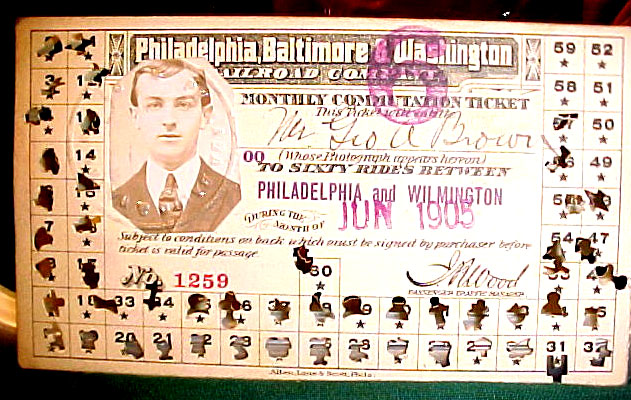
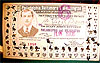 PB&W
Commuter Ticket. Occasionally an everyday paper
item of long ago can be a particularly interesting artifact
today. The commuter ticket show at right is one example.
It dates from 1905 and is from the Philadelphia, Baltimore & Washington
Railroad, a line that eventually became part of the Pennsylvania
Railroad. The ticket is unusual in having a photograph
of the user -- it was no good without the photograph. Also
the ticket shows quite a large number of different conductors'
punches. Each conductor had his own punch pattern. Photo
by Bob Niblick. Click on the image for a larger version. PB&W
Commuter Ticket. Occasionally an everyday paper
item of long ago can be a particularly interesting artifact
today. The commuter ticket show at right is one example.
It dates from 1905 and is from the Philadelphia, Baltimore & Washington
Railroad, a line that eventually became part of the Pennsylvania
Railroad. The ticket is unusual in having a photograph
of the user -- it was no good without the photograph. Also
the ticket shows quite a large number of different conductors'
punches. Each conductor had his own punch pattern. Photo
by Bob Niblick. Click on the image for a larger version. |
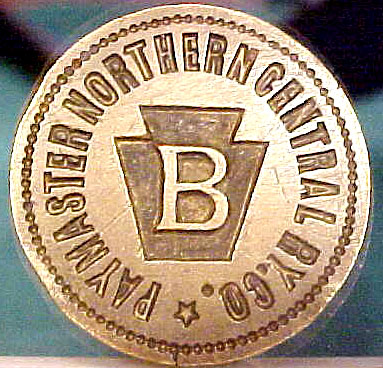
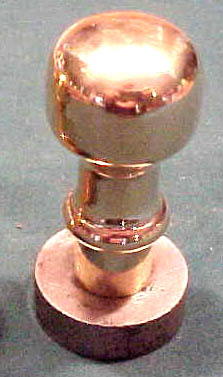
  Northern
Central Sealer. Sealers were used to imprint information
in sealing wax which secured envelopes for official correspondence.
This information typically included the company name and
either a location or an official's title. The sealer shown
at right is from a paymaster of the Northern Central Railway,
a line that ran from Baltimore through Eastern Pennsylvania
to upper New York State. Eventually the line was absorbed
by the Pennsylvania Railroad. The image of the imprint
was reversed for readability. Photos by Bob Niblick. Click
on the images for larger versions. Northern
Central Sealer. Sealers were used to imprint information
in sealing wax which secured envelopes for official correspondence.
This information typically included the company name and
either a location or an official's title. The sealer shown
at right is from a paymaster of the Northern Central Railway,
a line that ran from Baltimore through Eastern Pennsylvania
to upper New York State. Eventually the line was absorbed
by the Pennsylvania Railroad. The image of the imprint
was reversed for readability. Photos by Bob Niblick. Click
on the images for larger versions. |
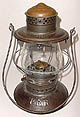 Kelly
Brass-Top "PRR" Lantern. Brass-top railroad
lanterns are particularly prized by lantern collectors
because of their distinctive appearance and their age.
Most (though not all) date to the 19th century. See our page
on this lantern style. The example shown at right is
particularly nice because it is "triple marked".
That is, the railroad designation -- "PRR" for
the Pennsylvania Railroad -- is marked on the lid, the
globe and the bellbottom base. The manufacturer, which
went by "Kelly Lamp Works" and similar names
during its corporate life span, was an early railroad lantern
maker. Photo by permission. Click on the image for a larger version. Kelly
Brass-Top "PRR" Lantern. Brass-top railroad
lanterns are particularly prized by lantern collectors
because of their distinctive appearance and their age.
Most (though not all) date to the 19th century. See our page
on this lantern style. The example shown at right is
particularly nice because it is "triple marked".
That is, the railroad designation -- "PRR" for
the Pennsylvania Railroad -- is marked on the lid, the
globe and the bellbottom base. The manufacturer, which
went by "Kelly Lamp Works" and similar names
during its corporate life span, was an early railroad lantern
maker. Photo by permission. Click on the image for a larger version. |
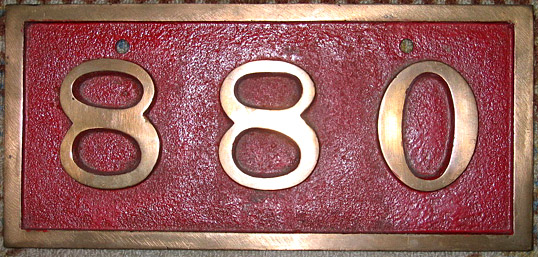
 Locomotive
Number Plate. Number plates were mounted on the
front of a steam locomotive to indicate the number assigned
to it by the railroad company. Number plates were cast
metal and one of the few items that were sometimes salvaged
from steam locomotives when they were scrapped. The brass
number plate shown at right is from Southern Railway Engine
#880, a 2-8-0 Consolidation, Class Ks, built in 1910 by
Baldwin Locomotive Works. The locomotive survived into
the 1950's, having been sold to Granite City Steel Company
in 1952. Photo by permission. Click on the image for a
larger version. Locomotive
Number Plate. Number plates were mounted on the
front of a steam locomotive to indicate the number assigned
to it by the railroad company. Number plates were cast
metal and one of the few items that were sometimes salvaged
from steam locomotives when they were scrapped. The brass
number plate shown at right is from Southern Railway Engine
#880, a 2-8-0 Consolidation, Class Ks, built in 1910 by
Baldwin Locomotive Works. The locomotive survived into
the 1950's, having been sold to Granite City Steel Company
in 1952. Photo by permission. Click on the image for a
larger version. |
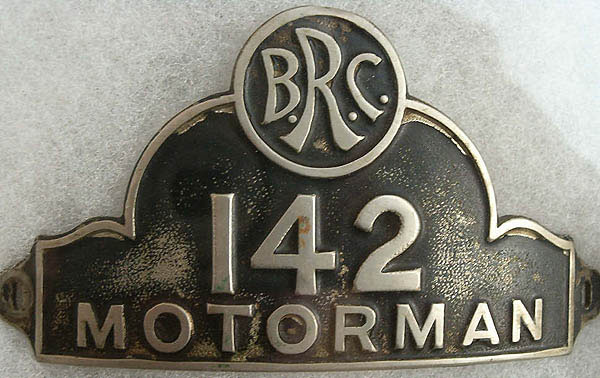
 Binghamton
Ry Cap Badge. Cap badges were pinned to official
railroad uniform hats to indicate an employee's occupation.
The number of occupations that can be found on cap badges
is quite large, ranging from common ones like Conductor
and Brakeman to less common ones like Transfer Agent and
Time Clerk. The badge shown at left is a Motorman badge
from the Binghamton Railway Company, a traction operation
in the Binghamton, New York area. Photo by Tom Stranko.
Click on image for larger version. Binghamton
Ry Cap Badge. Cap badges were pinned to official
railroad uniform hats to indicate an employee's occupation.
The number of occupations that can be found on cap badges
is quite large, ranging from common ones like Conductor
and Brakeman to less common ones like Transfer Agent and
Time Clerk. The badge shown at left is a Motorman badge
from the Binghamton Railway Company, a traction operation
in the Binghamton, New York area. Photo by Tom Stranko.
Click on image for larger version. |
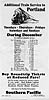 Southern Pacific Broadside. Railroads
frequently issued one-page flyers to advertise new or changed
passenger service. These are generally referred to as "broadsides" and
could be as elaborate as large schedules for union stations
or as simple as one schedule for a special train. The example
shown at right is from the Southern Pacific Company advertising
a special Tuesday through Sunday train from Eugene to Portland,
Oregon in December of 1927. The flyer indicates that passengers
could return by Southern Pacific Motor Coach if they wished.
Photo by permission. Click on image for larger version. Southern Pacific Broadside. Railroads
frequently issued one-page flyers to advertise new or changed
passenger service. These are generally referred to as "broadsides" and
could be as elaborate as large schedules for union stations
or as simple as one schedule for a special train. The example
shown at right is from the Southern Pacific Company advertising
a special Tuesday through Sunday train from Eugene to Portland,
Oregon in December of 1927. The flyer indicates that passengers
could return by Southern Pacific Motor Coach if they wished.
Photo by permission. Click on image for larger version. |
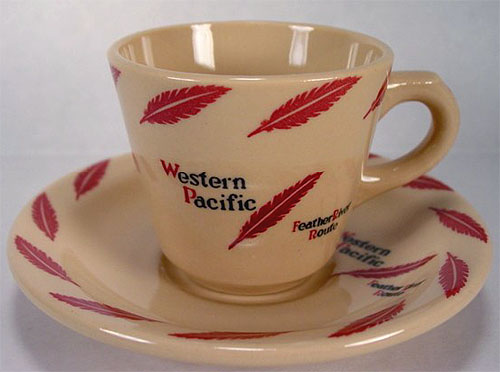
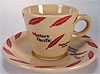 Western
Pacific Demi Set. Railroad
china can be found in a wide variety of shapes and sizes,
but the demitasse cup and saucer combination or "demi
set" is particularly desirable. Some collectors specialize
in collecting demi sets in different railroad china patterns.
The striking example shown at right is a demi set in the "Feather
River" pattern of the Western Pacific Railway. According
to McIntyre, the
pattern was produced from 1947 to 1949. While the "Feather
River" pattern can be found in many different pieces
and is not particularly rare, the demi set is considered
scarce. Photo by permission. Click on image for larger version. Western
Pacific Demi Set. Railroad
china can be found in a wide variety of shapes and sizes,
but the demitasse cup and saucer combination or "demi
set" is particularly desirable. Some collectors specialize
in collecting demi sets in different railroad china patterns.
The striking example shown at right is a demi set in the "Feather
River" pattern of the Western Pacific Railway. According
to McIntyre, the
pattern was produced from 1947 to 1949. While the "Feather
River" pattern can be found in many different pieces
and is not particularly rare, the demi set is considered
scarce. Photo by permission. Click on image for larger version. |
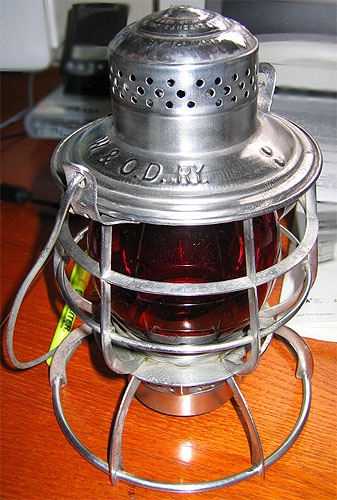
 W&OD
Ry Lantern marking."Tall
globe" lanterns made by Armspear Manufacturing are fairly
common in the collectors' market, owing to the fact that
they were exceptionally well made of heavy gauge steel. See
our page on Armspear
lanterns. However, the lantern shown at right is still
rare because of its marking. Stamped on the rim are the letters "W.& O.D.
Ry." for the Washington & Old Dominion Railway.
This was a small road in the Washington D.C. area that eventually
became part of the Southern Railway. Making this lantern
even more unusual is the fact that it is in almost mint condition,
unusual even for an Armspear. Photo by permission. Click
on image for larger version. W&OD
Ry Lantern marking."Tall
globe" lanterns made by Armspear Manufacturing are fairly
common in the collectors' market, owing to the fact that
they were exceptionally well made of heavy gauge steel. See
our page on Armspear
lanterns. However, the lantern shown at right is still
rare because of its marking. Stamped on the rim are the letters "W.& O.D.
Ry." for the Washington & Old Dominion Railway.
This was a small road in the Washington D.C. area that eventually
became part of the Southern Railway. Making this lantern
even more unusual is the fact that it is in almost mint condition,
unusual even for an Armspear. Photo by permission. Click
on image for larger version. |
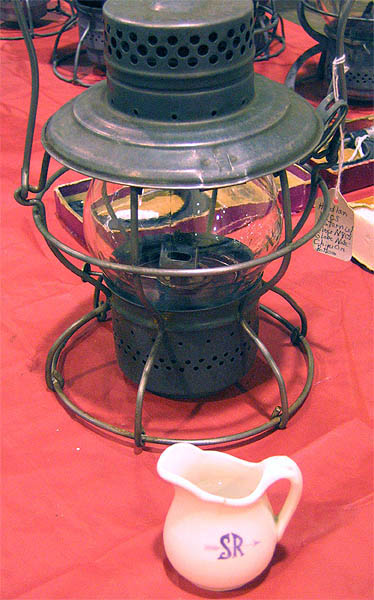
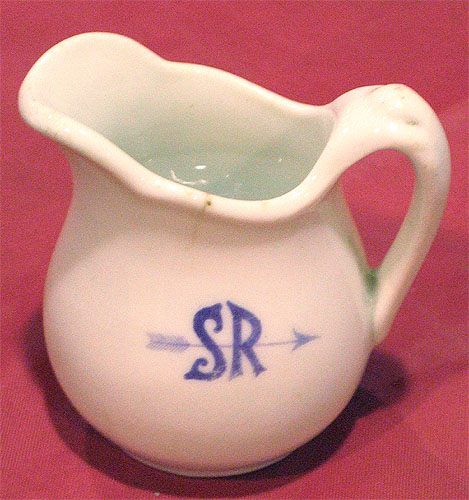
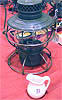 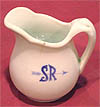 Rare
Southern Railway China. Railroad
china collectors have now documented almost all patterns
ordered by U.S. railroads. However, occasionally an unknown
pattern surfaces. Case in point: The small creamer at immediate
right is from the Southern Railway. While the "arrow" logo
has been previously seen on Southern Railway timetables and
silverware, it has not been documented on china. This example
was photographed at the December 2005 Columbus Railroadiana
show. The photo at far right shows the size of the creamer
in comparison to a lantern. Photos by Rob Hoffer. Click on
images for larger versions. Rare
Southern Railway China. Railroad
china collectors have now documented almost all patterns
ordered by U.S. railroads. However, occasionally an unknown
pattern surfaces. Case in point: The small creamer at immediate
right is from the Southern Railway. While the "arrow" logo
has been previously seen on Southern Railway timetables and
silverware, it has not been documented on china. This example
was photographed at the December 2005 Columbus Railroadiana
show. The photo at far right shows the size of the creamer
in comparison to a lantern. Photos by Rob Hoffer. Click on
images for larger versions. |
 Allegheny
Railroad Marked Crock. Earthenware
crocks are prized collectibles among collectors of Americana,
but examples marked for railroads are also of interest
to railroadiana collectors. The rare crock shown at right
is lettered: "J. BEATY &
SON. KELLY'S STATION A.V.R.R. PA." The railroad initials
likely stand for Allegheny Valley Railroad, a line near Pittsburgh
that eventually became part of the Pennsylvania Railroad.
Use of the crock is unknown. Photo by Gary Moser.
Click on the image for a larger version. Allegheny
Railroad Marked Crock. Earthenware
crocks are prized collectibles among collectors of Americana,
but examples marked for railroads are also of interest
to railroadiana collectors. The rare crock shown at right
is lettered: "J. BEATY &
SON. KELLY'S STATION A.V.R.R. PA." The railroad initials
likely stand for Allegheny Valley Railroad, a line near Pittsburgh
that eventually became part of the Pennsylvania Railroad.
Use of the crock is unknown. Photo by Gary Moser.
Click on the image for a larger version. |